
Cogeneration for mini biomass power plants: electricity + heat, optimised efficiency
We integrate biomass cogeneration into our mini biomass power plant solutions to produce electricity and heat simultaneously. This dual energy recovery system is perfectly suited to local authorities and industries with large volumes of organic waste to transform into local, sustainable energy.
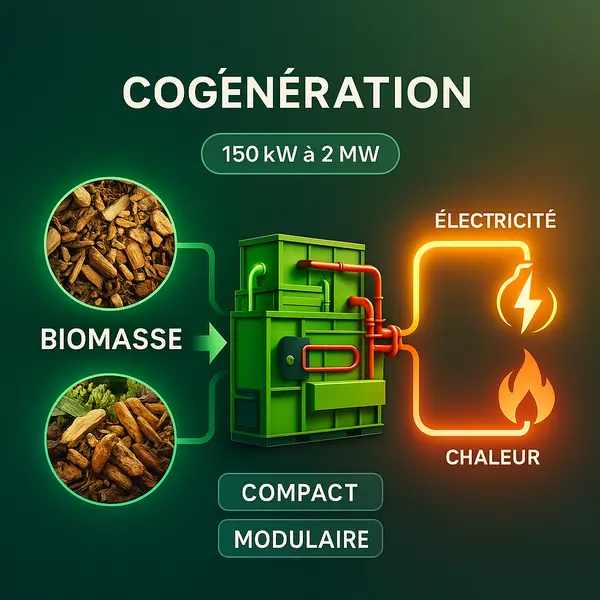
What is cogeneration in a mini-biomass plant?
La biomass cogeneration consists of producing electricity and heat from the combustion of organic matter.
Applied to mini biomass power plants (between 150 kW and 2 MW), this technology enables a optimised energy efficiency in compact, modular facilities tailored to the needs of medium-sized structures.
Unlike large thermal power plants, our units are designed to be integrated locally, with simple operation and high efficiency.
How does a mini biomass cogeneration plant work?
How a mini biomass power plant is based on a perfectly controlled energy chain:
Sourcing organic waste (wood, agricultural residues, food processing residues) collected locally
Combustion in a high-efficiency boiler
Heat production for heating or industrial processes
Electrical conversion thanks to an ORC module or a micro-turbine
Loss recovery to maximise thermal efficiency
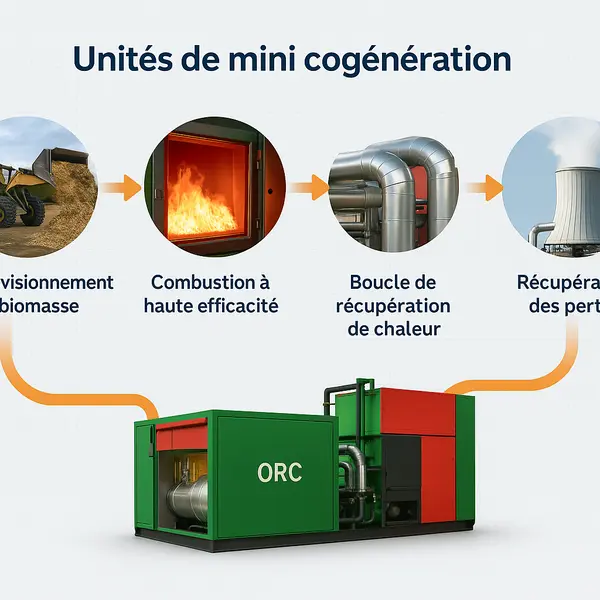

Energy efficiency: up to 85%
One of the great advantages of a mini biomass combined heat and power plantis its overall efficiency. By recovering both the electricity and the heat, you can achieve levels of performance that are much higher than those achieved by a conventional system. incomparable with conventional systems.
Electrical efficiency between 25 and 35 %
Recoverable heat output up to 60 %
Total return : often more than 80 %, sometimes up to 85 %
This allows significant reduction in your external energy requirements and a faster return on investment.
Who should consider biomass cogeneration?
Our micro biomass power plants are aimed at players with :
constant volumes of organic waste to develop,
from regular heat requirements (heating of buildings, drying, industrial processes),
a need for electricity partial or total on site.
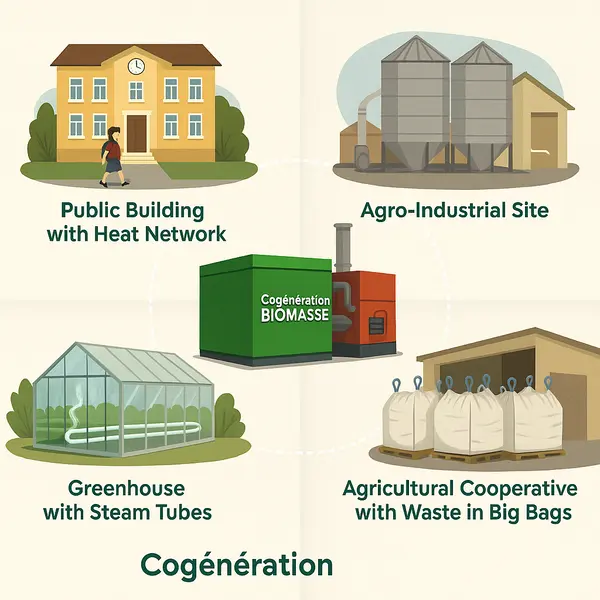
Examples of suitable profiles:
Local authorities with heating networks
Food industry
Agricultural greenhouses
Agricultural cooperatives
Waste treatment centres
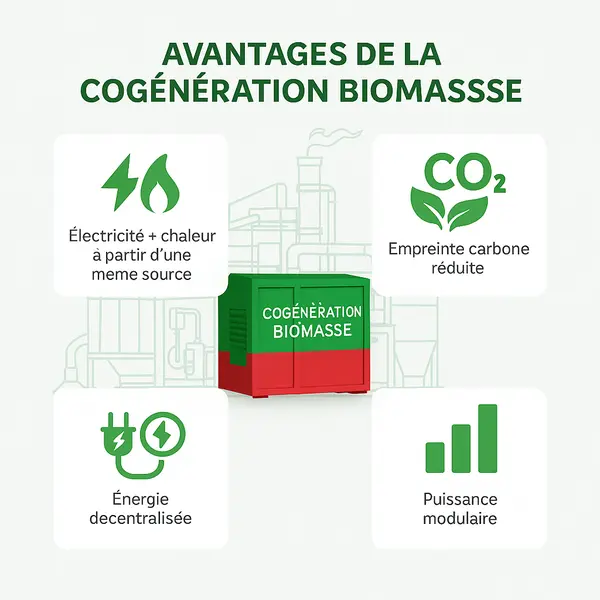
The key advantages of biomass cogeneration
🔁 Double value heat + electricity from a single resource
💰 Increased profitability : lower energy purchases + available aid
🌱 Low carbon footprint a low-carbon, circular solution
🏭 Decentralised generation independence from the network
🔧 Flexibility scalable power from 100 kW to several MW
Example of integration into an energy chain
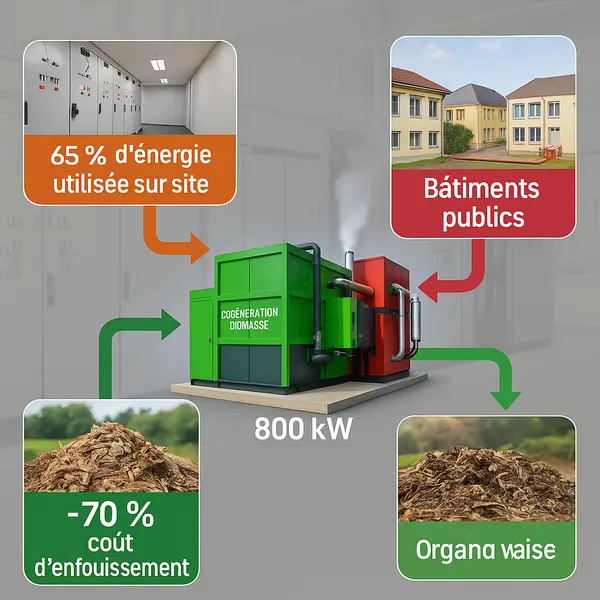
Let's take the example of a organic waste sorting centre with local heat production for a municipal network. By installing a mini 800 kW biomass cogeneration plant:
electricity covers 65 % of the site's consumption,
the heat is injected into a district network of 3 public buildings,
Waste recovery reduces landfill costs by 70 %.

Difference from a conventional installation
Unlike a conventional biomass installation (heat production only), cogeneration :
requires a more advanced technical configuration,
offers greater energy efficiency,
requires precise sizing of your thermal and electrical requirements.
It's the perfect solution for sites looking to maximise their energy autonomy.
Free quote
Would you like to produce heat and electricity from your organic waste?
🎯 Request a free study for a mini biomass cogeneration plant.

 English (UK)
  Français
  Español
  Português
  Italiano
  Deutsch
  Nederlands
  Čeština
  Svenska
  Suomi
Suomi  Eesti
Eesti